snook-fleet harness
The autonomous multi-agent engineering harness that builds and ships Snook A Look: specialised agent panes, written doctrine, mechanical review and merge gates, and a human for the calls that matter.
How it works
One founder sets priority. Pillar panes decide when and who, what to build, and what the fleet has learned; worker panes write the code; a small Python daemon moves briefs between them. Every action passes a mechanical gate and leaves an audit receipt.
- Specialised panes: principal, architect, curator and an audit pane as pillars; backend, Android, iOS, admin web, device QA and PR stewardship as workers.
- Written doctrine: an incident becomes a dated founder ruling, then a numbered doctrine slot, then a hook, script or CI check that enforces it.
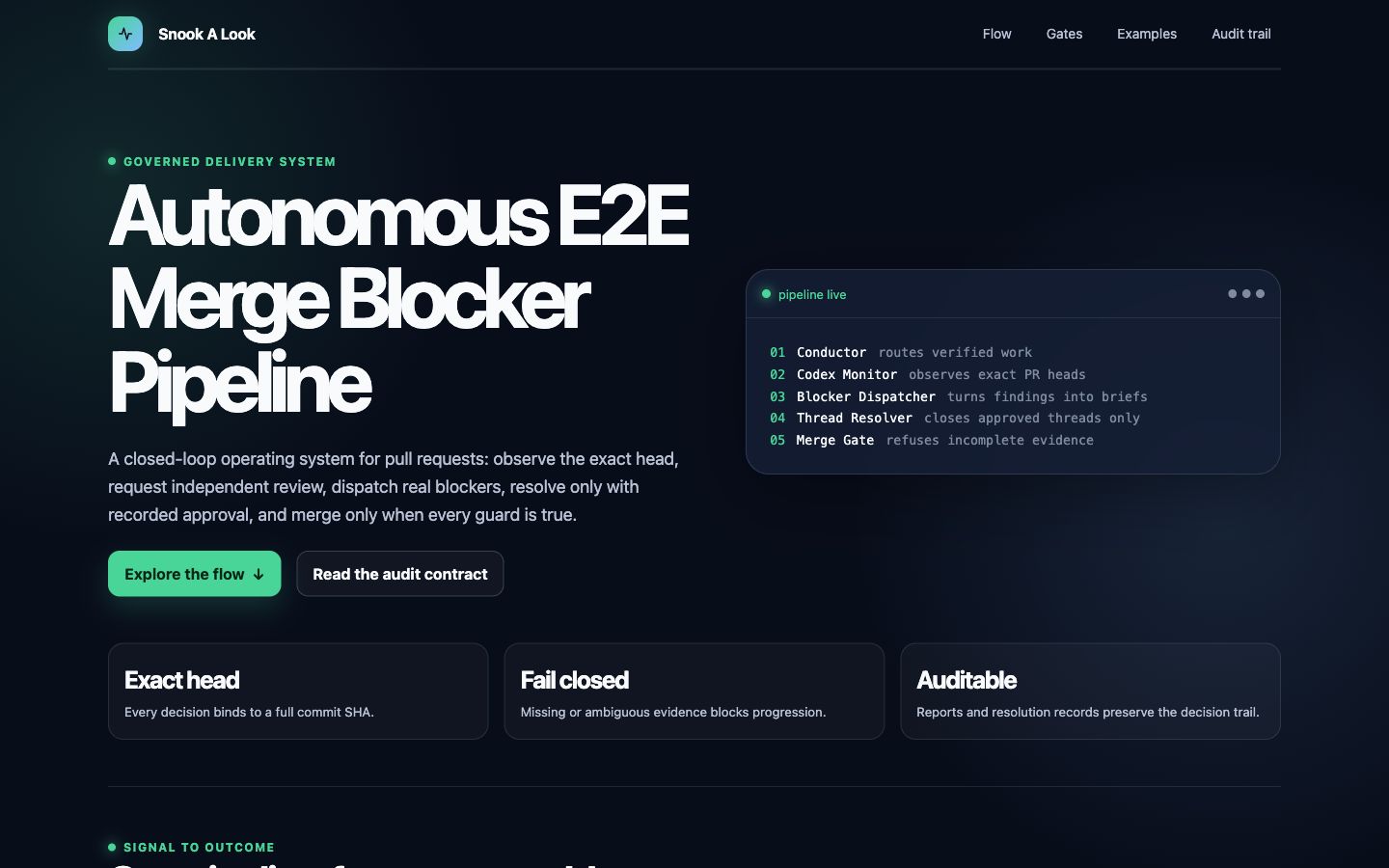
- Review and merge gates: an independent review trio on the exact commit, an automated code review on every head, and a merge script that refuses without receipts, resolved threads and green CI.
- Human review: store releases, product decisions, collisions, production incidents and anything touching money stop and wait for the founder.
Read the documents
- How the fleet worksThe full explainer: roster, life of a task, authority, gates, doctrine and memory.
- Operating manualDay-to-day operation: roles, flow, gates, decisions and commands.
- Merge gatesThe autonomous end-to-end merge blocker pipeline, gate by gate.
- Lean execution flowHow a founder batch becomes small, verified, shipped changes.
The complete feature flow
